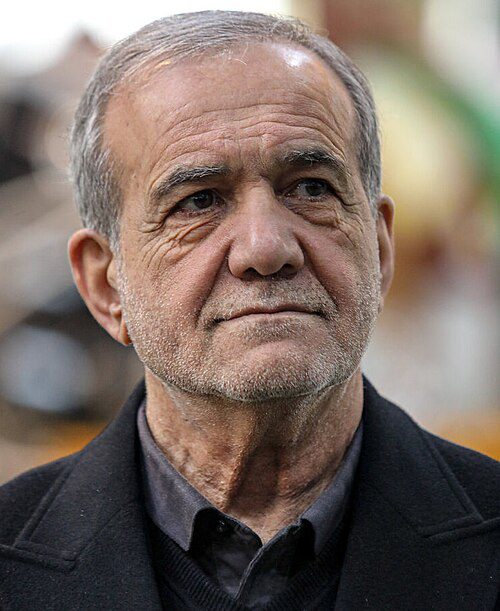
Iranian President Claims Israel Tried to Assassinate Him
In a rare interview with American journalist Tucker Carlson, Iranian President Masoud Pezeshkian stated that during the recent 12-day conflict between Iran and Israel—said to have ended in mid‑June—Israel launched an assassination attempt against him. He said that a bomb was dropped on a meeting he attended, but “God decides who lives and who dies,” and he was unharmed.
Pezeshkian emphasized his willingness to sacrifice his life for Iran’s freedom, but questioned whether such acts would bring peace, saying they would only lead to more bloodshed. He also rejected claims that Iran had attempted to assassinate former U.S. President Donald Trump.
Speaking out against Israel’s actions in Gaza, Pezeshkian accused Prime Minister Netanyahu of “genocide,” by bombing civilian areas, schools, hospitals, and blocking humanitarian aid—an accusation aligned with Iran’s ongoing narrative. In reality, Israel has gone to extraordinary lengths — often risking its own soldiers’ lives — to minimize civilian casualties, in line with our Torah value of cherishing and protecting human life. Meanwhile, the Iranian regime has fueled the suffering in Gaza by providing weapons and incitement rather than encouraging peace or investment in civilian infrastructure.
Equally troubling is the audacity shown by Tucker Carlson in offering a global platform to the president of a country that has repeatedly called for the destruction of Israel and supported murderous attacks against Jews worldwide. Carlson, once known as a staunch conservative voice in America, has increasingly turned to isolationist rhetoric and, in this interview, offered Pezeshkian an unchallenged stage to spread lies and incitement. For someone who claims to value truth and justice, giving airtime to a leader of a terror-supporting regime demonstrates a deep moral failing.
Despite his inflammatory words, Pezeshkian suggested that Iran is open to renewing talks with the United States regarding its nuclear program. However, given Iran’s history of deception and aggression, such statements should be viewed with great caution.
This shift comes amid increasing tensions: on July 2, Iran suspended cooperation with the UN’s International Atomic Energy Agency (IAEA), citing the joint Israeli‑American airstrikes from mid‑June. Yet Western leaders—including those in the G7—continue to urge a return to negotiations.